The asphalt paving process is a carefully planned and executed series of steps that ensures pavement surfaces are durable, safe, and built to last. Whether you’re installing a commercial parking lot or a roadway, every stage of the process plays an important role in the long-term performance of the finished surface.
At Chamberlain Contractors, we’ve completed asphalt paving projects throughout Maryland and the Washington, D.C. region for commercial, industrial, and municipal clients. Through years of experience, we’ve seen firsthand how proper planning, preparation, and installation directly impact pavement lifespan and overall project success.
In this guide, we’ll break down the complete asphalt paving process and explain why each step matters in creating long-lasting results.
Understanding the Asphalt Paving Process
Many property owners are surprised by the amount of planning and engineering that goes into a successful paving project. Successful paving projects require extensive site evaluation, grading, drainage planning, proper base construction, quality materials, and precise installation techniques.
Types of Asphalt Paving Projects
Different paving projects require different approaches based on traffic demands and site conditions. Common project types include:
Commercial parking lots
Industrial facilities
Municipal roadways
Access roads
Loading areas
Retail centers
Office complexes
Hot Mix vs. Warm Mix Asphalt
Hot mix asphalt is produced at temperatures between approximately 300°F and 350°F. On the other hand, warm mix asphalt paving uses lower production temperatures while still creating durable, lasting results. Warm mix asphalt may reduce fuel consumption during production and can sometimes extend paving seasons in certain climates.
The appropriate material depends on project specifications, environmental conditions, and performance requirements.
The Complete 7-Step Asphalt Paving Process
What are the steps to properly install asphalt paving? Professional contractors follow a structured approach designed to maximize pavement performance and longevity. Here’s what that looks like:
Step 1 – Site Assessment and Planning
Every successful project begins with a thorough site evaluation. During this stage, contractors assess the current pavement condition, soil conditions, permit requirements, and drainage needs. Projects requiring utility modifications often involve specialized drainage and utilities services before paving begins.
Step 2 – Excavation and Grading
Once planning is complete, the site is prepared for construction. This stage may involve:
Removing existing pavement
Excavating unstable soils
Establishing proper grades
Creating drainage slopes
Preparing the subgrade
Proper grading is critical. Even the highest-quality asphalt installation will fail prematurely if water cannot drain effectively from the pavement surface.
Step 3 – Sub-Base Installation
The sub-base serves as the foundation of the entire pavement structure. Typically constructed from crushed aggregate materials, the sub-base distributes loads and provides stability for the pavement above.
Step 4 – Binder Layer Application
The binder layer creates a strong structural connection between the base and surface asphalt. This asphalt mixture contains larger aggregate materials and provides additional strength to support vehicle loads.
Step 5 – Asphalt Mix Application
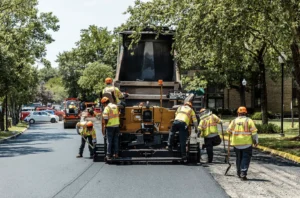
Next comes the installation of the surface asphalt mix. This stage requires careful coordination and temperature control. Asphalt is installed while hot and must be placed efficiently to maintain workability and achieve proper compaction.
Step 6 – Compaction and Finishing
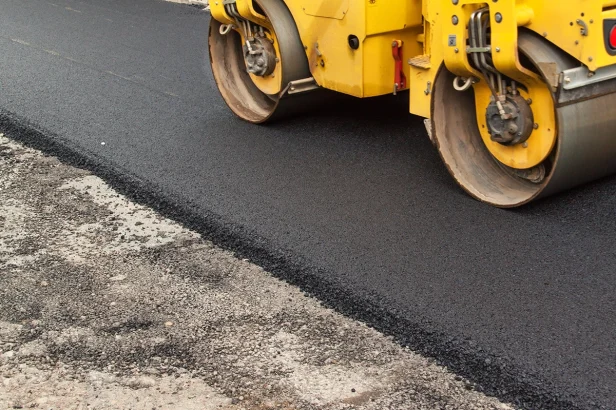
Compaction is one of the most important steps in the asphalt paving process. While the asphalt remains within the proper temperature range, our crew uses professional-grade rolling equipment to compress the material and eliminate air voids. The result is a dense, durable pavement surface that’s built to last.
Step 7 – Final Inspection and Curing
Following installation, asphalt requires time to cool and cure. While surfaces may be opened to light traffic within 24 to 48 hours, full curing can take several weeks depending on weather conditions and pavement thickness. During this time, contractors perform a final inspection to make sure the new surface is smooth, durable, and properly draining.
Quality Control and Equipment in the Paving Process
Professional paving contractors rely on strict quality control procedures throughout every phase of construction. Temperature monitoring, density testing, material verification, and inspection protocols help ensure the finished pavement meets performance expectations.
Essential Paving Equipment
Modern asphalt paving projects require specialized equipment designed to create smoother surfaces, achieve proper density, and maintain quality standards throughout the installation process.
Asphalt Mix Design and Quality Control
Asphalt mix quality directly affects pavement performance and long-term durability. Mix designs are developed based on factors such as aggregate size, binder content, expected traffic loads, climate conditions, and surface requirements.
Before installation, contractors test the materials to ensure they meet project specifications. These tests typically include density testing, temperature monitoring, material sampling, laboratory analysis, and thickness verification. Together, they help ensure the finished pavement performs as intended for years to come.
Common Challenges in the Asphalt Paving Process
Every paving project presents unique challenges that must be addressed to achieve optimal results. Common issues include:
Poor drainage
Unstable soils
Utility conflicts
Weather-related issues
Existing pavement failures
Traffic management concerns
Experienced contractors anticipate these challenges and develop solutions before they affect project timelines or quality.
When to Call Professional Contractors
While small maintenance tasks may be manageable for property owners, full paving projects require specialized knowledge, equipment, and experience. Attempting large-scale paving without proper expertise often leads to expensive repairs and premature pavement failure.
Property owners considering a paving project should work with experienced professionals who understand local conditions and industry standards. Our team at Chamberlain Contractors provides professional asphalt and concrete paving services throughout Maryland and the Washington, D.C. region, helping clients navigate every stage of the paving process. Try out our asphalt calculator to get a general idea of what your next project may cost.
Get in touch with us today to schedule an inspection.
FAQs
How long does the complete asphalt paving process take?
Commercial paving projects often require one to two weeks, depending on size, complexity, drainage requirements, and traffic management needs. Our team will give you a general project timeline during the initial inspection.
What temperature is required for asphalt paving?
Asphalt is typically installed between 300°F and 350°F. Air temperatures should also generally remain above 50°F to support proper compaction and pavement performance.
Can the process of asphalt paving be done in winter?
Cold-weather paving is possible but often requires special procedures and equipment. Most contractors recommend scheduling paving projects during spring, summer, or fall when conditions are more favorable.
How soon can I drive on newly paved asphalt?
Light vehicle traffic can usually resume after 24 to 48 hours. Full curing may take 30 to 90 days depending on pavement thickness, outdoor temperatures, and weather conditions.
What happens if it rains during the asphalt paving process?
Rain during installation can interfere with bonding, compaction, and overall pavement quality. Professional contractors closely monitor forecasts and may postpone work to protect the integrity of the finished product.