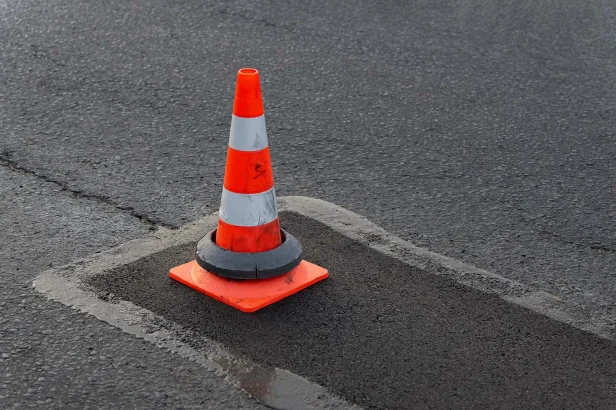
Potholes form when water enters cracks in asphalt, freezes, expands, and weakens the pavement. As vehicles drive over the damaged area, the surface eventually collapses into a hole. Potholes are common throughout Maryland because of the region’s freeze-thaw cycles, regular rainfall, and heavy traffic.
Chamberlain Contractors has repaired commercial parking lots, private roads, and asphalt surfaces across the Mid-Atlantic since 1976. Leveraging 50 years of experience, this guide explains what causes potholes and how to fix them before they lead to premature failure.
What Are Potholes?
Potholes are bowl-shaped holes that form when pavement loses support beneath the surface. They develop on public roads as well as private parking lots, driveways, and access roads.
How do potholes form? Most potholes begin as small cracks in an asphalt surface. Once water reaches the sub-base, the pavement weakens until eventually breaking apart.
How Potholes Differ from Other Asphalt Damage
Surface cracks affect only the top layer, alligator cracking is a fatigue pattern, and rutting is a depression without missing asphalt. A pothole, on the other hand, is a missing patch of pavement caused by structural failure. Each problem requires a different repair approach.
Private Parking Lots vs. Public Roads — Who's Responsible?
Public roads are maintained by government agencies, while private parking lots are the responsibility of the property owner. Regardless of where they occurred, unrepaired potholes can create safety hazards and liability concerns.
The 4 Main Causes of Potholes
1. Water Infiltration — How Moisture Gets Under Pavement
Water is the first step in pothole formation. It enters through cracks, pavement edges, joints, and low spots with poor drainage.
Once water reaches the sub-base, it softens the supporting material. Even a small crack can allow enough moisture to begin weakening the pavement, making early repairs important.
2. The Freeze-Thaw Cycle — Why Winter Is the Worst Offender
When trapped water freezes, it expands and pushes the asphalt apart. As temperatures rise, the ice melts and leaves empty space beneath the pavement. After repeated freeze-thaw cycles, the unsupported surface eventually collapses.
Across Maryland, Chamberlain Contractors’ crews typically see pothole damage peak in late winter and early spring, when crumbling edges and loose aggregate become more common.
3. Traffic Load — How Vehicles Punch Through Weakened Pavement
Traffic finishes the job once the pavement has weakened. Every vehicle adds pressure to unsupported asphalt, causing it to crack and break apart.
Commercial parking lots with delivery trucks, buses, or heavy equipment are especially vulnerable. That’s why potholes often develop near entrances, loading areas, and dumpster enclosures.
4. Pavement Age and Oxidation — When Asphalt Loses Its Flexibility
Asphalt naturally becomes more brittle over time. Sun exposure, oxidation, and weather slowly break down the binder that holds the pavement together.
Older asphalt cracks more easily, allowing water to reach the sub-base. If a parking lot is showing widespread cracking, potholes are often the next stage of deterioration without maintenance.
Why Potholes Are a Serious Problem for Maryland Property Owners
Potholes affect more than your pavement. They can increase ownership costs, create safety risks, and damage your property’s appearance.
- Liability concerns: Damaged pavement can contribute to trips, falls, or vehicle damage. Property owners should maintain safe conditions and consult legal counsel regarding liability questions.
- Vehicle damage: AAA reports that potholes cost U.S. drivers billions of dollars in vehicle repairs every year.
- Higher repair costs. Small potholes grow quickly as water and traffic continue to weaken the pavement. Early pothole repair is less expensive than major reconstruction.
- Poor curb appeal. A deteriorating parking lot creates a negative first impression for customers, tenants, and visitors.
When to Call a Professional for Pothole Repair
Cold-patch products can provide a temporary repair for small potholes in low-traffic areas, but they are not designed to last. Most fail after another freeze-thaw season.
Professional repairs address both the damaged pavement and the underlying cause. Depending on the condition of the asphalt, repairs may include hot-mix patching, saw-cut repairs, or infrared asphalt repair, which heats and re-bonds existing asphalt for a seamless repair.
Call a professional if a pothole is more than 2 inches deep, wider than 12 inches, located near drainage areas, or found in high-traffic lanes.
Signs Your Parking Lot Needs Professional Pothole Repair
- Potholes larger than 12 inches
- Crumbling pavement around the edges
- Multiple potholes in the same area
- DIY patches that continue to fail
- Standing water around the damage
- Damage within an ADA-accessible route
Repair Methods — What the Right Fix Looks Like
If you’re wondering how to fix potholes, the best repair method depends on the damage severity and pavement condition.
Repair methods include:
- Infrared asphalt repair: Restores isolated potholes by heating and re-bonding existing asphalt.
- Saw-cut patching: Removes damaged pavement and replaces it with new asphalt.
- Full-depth reconstruction: Rebuilds the pavement structure when the base has failed.
Frequently Asked Questions
What causes potholes to form?
Potholes form when water enters cracks in the pavement, freezes, expands, and weakens the asphalt. Traffic then breaks apart the unsupported surface.
Why do potholes get worse in winter?
Repeated freezing and thawing widens cracks and weakens the pavement, making late winter and early spring the most common time for potholes to appear.
Can potholes be prevented?
Yes. Regular inspections, crack sealing, sealcoating, and prompt repairs help prevent water from reaching the sub-base.
Who is responsible for potholes in a private parking lot?
Property owners are generally responsible for maintaining private parking lots. For legal questions about liability, consult a qualified attorney.
If you’ve noticed potholes or early pavement damage, contact Chamberlain Contractors for a professional parking lot assessment before the damage spreads.