Residents should review the project schedule, move vehicles from designated work areas, follow temporary parking and traffic instructions, and avoid closed pavement until it reopens. Boards and managers should communicate these requirements before work begins.
HOA Paving Company for Community Pavement Projects
Paving an HOA community involves more than just closing a parking lot and putting down new asphalt. Residents still need to reach their homes, deliveries need access, vehicles must be moved, and work may need to be completed in phases to keep parts of the property open.
An experienced HOA paving company can help boards and property managers coordinate those needs while addressing the actual condition of roads, parking areas, sidewalks, curbs, and other shared surfaces. As a self-performing contractor and a member of the Pave America family, Chamberlain Contractors provides asphalt, concrete, and pavement-maintenance services for HOAs, condominiums, townhome communities, and property managers across the Mid-Atlantic.
Paving for HOAs, Condos, and Townhome Communities
HOA paving takes place where people live. That makes access and scheduling important parts of the project. Before work begins, the contractor and community manager should identify areas that must remain accessible and determine how traffic, parking, deliveries, and resident movement will be handled.
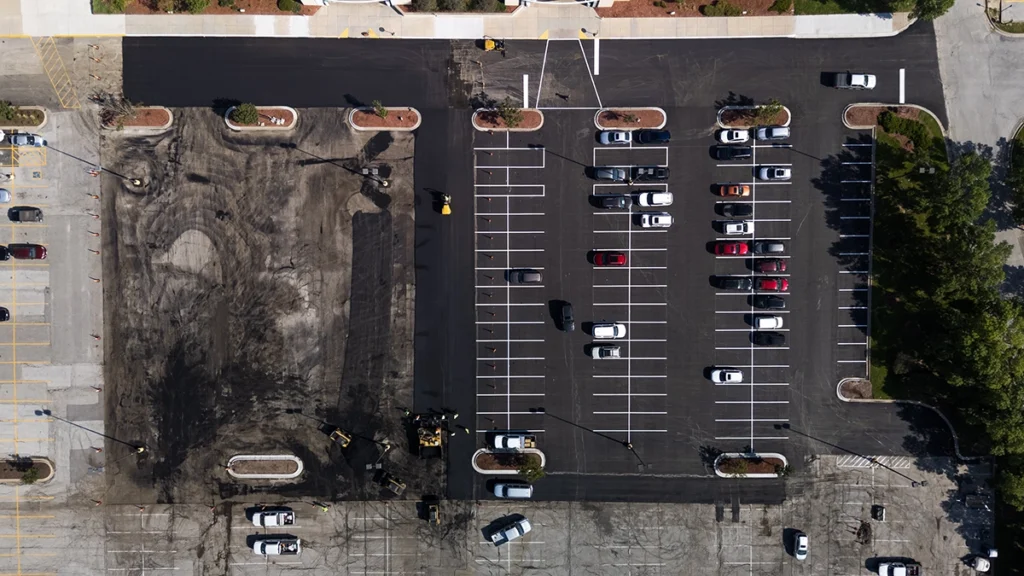
Larger projects may be completed in phases so crews can work in designated areas while other portions of the community remain open. A project can also involve several types of surfaces. Defining those needs early gives the board a clearer scope for comparing proposals and planning the work.
Asphalt and Concrete Services for HOA Communities
Asphalt Paving and Resurfacing
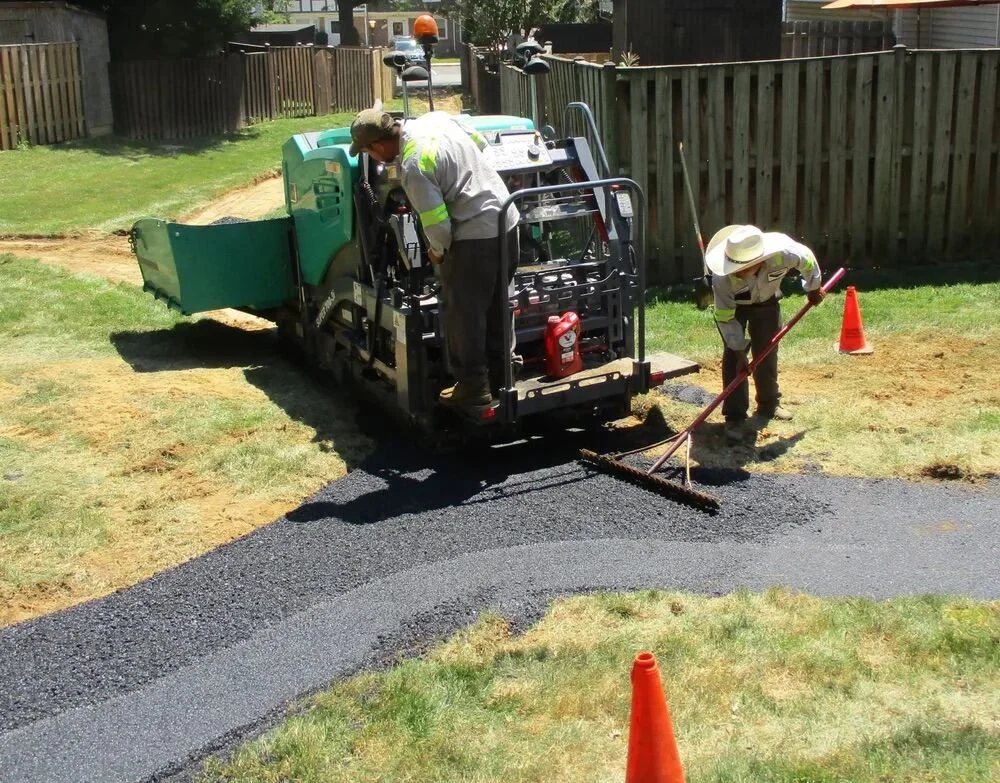
HOA asphalt projects can include private roads, parking areas, entrances, and access drives. Depending on pavement condition, the work may involve new paving, resurfacing, rehabilitation, or replacement. Chamberlain’s asphalt paving services can address installation and rehabilitation needs. For an HOA board, the key question is not simply whether new asphalt is needed. It is how much of the pavement system requires work and why.
Pavement Repairs and Preventive Maintenance
Not every pavement problem requires resurfacing. Patching, pothole repairs, crack filling, sealcoating, infrared repairs, and other maintenance may be appropriate when deterioration is more limited. Preventive parking lot maintenance can also help associations address pavement needs before they become larger projects.
Concrete, Curbs, and Sidewalks
HOA projects often extend beyond asphalt. Deteriorated curbs, sidewalks, entrances, ramps, and common-area concrete may also require attention. Coordinating asphalt work with concrete curbing and repairs can simplify project planning and help the board understand how related improvements fit within one scope.
Pavement Markings and Accessibility
Parking-area work may also involve pavement markings such as parking spaces, crosswalks, fire lanes, directional markings, and accessible parking features. Accessibility should be considered during planning rather than after paving is complete. Federal guidance addresses features including accessible spaces, access aisles, routes, slopes, signage, and van-accessible parking. Requirements can depend on the property and project, so associations should confirm applicable obligations with qualified professionals.
Planning Work Around Residents and Community Access
A clear schedule is especially important in an occupied community. Before construction, boards and managers should understand which areas will close, when vehicles need to move, how traffic will be routed, and when completed pavement can reopen. Giving residents clear instructions in advance can reduce confusion and help crews access scheduled work areas without avoidable delays.
Maintenance, Resurfacing, or Replacement?
The right paving solution depends on the type and extent of deterioration.
Preventive maintenance can help protect pavement that remains in serviceable condition. Localized repairs address concentrated failures such as potholes. Resurfacing adds a new asphalt surface when the existing pavement remains an appropriate candidate for rehabilitation. Milling removes part of the existing asphalt before resurfacing, while reconstruction may be necessary when deterioration extends into the pavement structure or underlying base.
For more extensive rehabilitation, asphalt milling and paving may be appropriate. A pavement assessment can help a board separate immediate needs from work that can be planned for a future budget cycle.
Reserve studies may help community associations plan for maintenance and replacement of shared components. Funding and reserve requirements vary, however. A paving contractor can help define pavement conditions and potential project scope, while the association and its appropriate advisors determine budgeting, governance, and reserve obligations.
What Should an HOA Look for in a Paving Company?
Price matters, but boards should also understand what each contractor is proposing for that price. A useful proposal should clearly identify the work areas, recommended treatment, major assumptions, responsibilities, and exclusions.
HOA decision-makers should consider whether a contractor can explain why a particular repair is recommended, coordinate around occupied residences, develop a practical phasing plan, address related asphalt and concrete needs, and provide a realistic schedule.
A clearly defined scope makes competing proposals easier to evaluate because the board can determine whether contractors are pricing comparable solutions rather than comparing bottom-line numbers alone.
Why Community Associations Choose Chamberlain Contractor
When reviewing paving proposals, look for a clearly defined scope. It should identify the areas being addressed, the type of work proposed, major project assumptions, and any important exclusions or responsibilities.
Boards and property managers should also consider whether a contractor can:
Explain why a repair, resurfacing, or replacement approach is recommended
Coordinate construction around residents and occupied buildings
Develop a practical phasing and access plan
Address related asphalt, concrete, curb, and pavement-marking needs
Provide appropriate project documentation
Establish a realistic construction schedule
Clearly explain what is and is not included in the proposal
Before soliciting or approving proposals, associations should also confirm their own bidding, voting, funding, and contract-approval requirements. These procedures can vary based on governing documents and applicable state or local requirements.
A well-defined scope makes competing proposals easier to evaluate. Instead of comparing two bottom-line numbers that may represent very different work, the board can determine whether contractors are actually proposing comparable solutions.
HOA Paving Services Across the Mid-Atlantic
As a Pave America company, Chamberlain serves properties throughout Maryland, Virginia, Pennsylvania, Delaware, and the D.C. Metro area. Associations can coordinate asphalt, concrete, maintenance, and related pavement needs with a contractor familiar with active community properties across the region.
Request an HOA Paving Assessment
Board members, community association managers, and property managers can contact Chamberlain Contractors to discuss pavement conditions, access concerns, priorities, and scheduling.
For ongoing repairs and preventive care, explore Chamberlain’s parking lot maintenance services. Communities considering more extensive rehabilitation can learn more about asphalt milling and paving.
Ready to define the right scope for your community? Request a quote from Chamberlain Contractors.
FAQs
What paving services does Chamberlain offer for HOA communities?
Chamberlain provides asphalt paving, milling and reclamation, pothole repairs, crack filling, sealcoating, pavement markings, parking lot maintenance, concrete, and curbing services for shared community surfaces.
Can an HOA paving project be completed in phases?
Many projects can be phased depending on property layout, scope, access needs, and scheduling. Phasing may keep portions of a community accessible while crews work in designated areas.
How can an HOA determine whether pavement needs repair or replacement?
The answer depends on the type, location, and extent of deterioration, along with drainage and underlying pavement conditions. A professional assessment can help the board prioritize repairs, resurfacing, or more extensive rehabilitation.